The AI Glow-Up: Seeing Is Believing in Product Image Transformation
For anyone in e-commerce, the last few years have been a whirlwind of AI-driven change. The first wave of AI photo editing tools has now crested and settled into the sand. One-click background removal, smart enhancement, and basic scene generation are no longer innovations; they are the expected baseline, integrated into every major platform from Shopify to Canva. The novelty has worn off, and a new, more profound era of visual commerce is beginning.
1. The Hyper-Personalized Storefront
Moving beyond static A/B testing, AI now renders product visuals in real-time based on user data. Imagine a customer in rainy London seeing a trench coat displayed on a model against a backdrop of the Tower Bridge, while a shopper in sunny Los Angeles sees the same coat styled for a beachside walk. This is achieved by combining generative AI with user data (location, weather, browsing history, style preferences).
The Impact:
Creates a deeply relevant and immersive shopping experience, dramatically increasing engagement and conversion by showing the customer not just a product, but the product in *their* world.
2. From Stills to Motion: AI-Generated Video
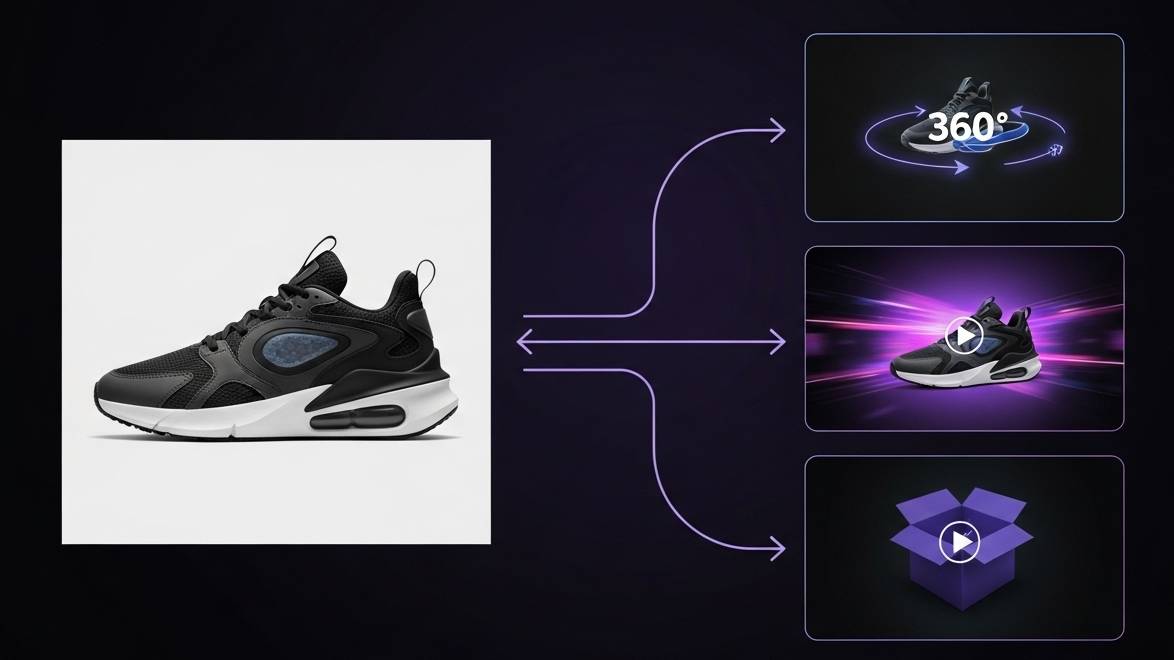
The demand for video content is insatiable, but production is expensive. The next frontier is AI that takes a single high-quality product image and generates a suite of video assets: simple 360-degree spins, unboxing animations, short social media ads with dynamic camera movements, and even explainer videos featuring AI-generated avatars.
The Impact:
Drastically lowers the barrier to video marketing, allowing brands to populate product pages and social feeds with engaging motion content at a fraction of the traditional cost and time.
3. Seamless & Realistic Virtual Try-On
Early VTO was clunky. By 2025, AI advancements allow customers to upload a simple selfie and see clothing, accessories, or even makeup rendered on them with startling realism. The AI accounts for body shape, lighting, and fabric drape. Similarly, AR placement for furniture and decor has become pixel-perfect, eliminating the "is this to scale?" guesswork.
The Impact:
Bridges the "imagination gap" between online and in-store shopping. It builds immense purchase confidence and is proven to significantly reduce return rates, a major pain point for e-commerce.
4. Predictive Performance Analytics
Before spending a single dollar on ad placement, AI can now analyze a set of images and predict their performance. By cross-referencing visual elements (color, composition, background style) with vast datasets of consumer behavior, these tools score creatives on their likely click-through rate, conversion potential, and brand alignment for specific demographics.
The Impact:
Removes the guesswork and budget waste from campaign creative. Marketers can optimize their visual strategy with data-backed confidence, ensuring the most effective images are put in front of the right audiences from day one.
5. On-Demand, Hyper-Realistic AI Models
The logistics of model photoshoots are a major bottleneck. The evolution of generative AI now allows brands to create bespoke, photorealistic virtual models. Need to showcase a new clothing line on five different body types across six different ethnicities? AI can generate these "on-model" shots instantly, perfectly matching the brand's aesthetic.
The Impact:
Massively increases inclusivity and representation, allowing customers to see products on someone who looks like them. It also slashes production costs and timelines, enabling brands to be more agile and diverse in their visual marketing.
The New Visual Imperative
The common thread through these trends is a shift from *editing* images to *generating experiences*. AI is no longer just a tool for correction; it's a strategic partner for creation, personalization, and prediction. For e-commerce brands, embracing this next wave isn't just about staying current—it's about building a more intelligent, responsive, and deeply engaging connection with customers in an increasingly competitive digital world. The future isn't just seen; it's rendered on demand.